Are Universes Beyond Cards a Good Long-Term Hold?
By TheCardRamp Team · July 28, 2026 · 6 min read
The short answer
Universes Beyond cards are a speculative long-term hold, not a safe one — they can spike fast on release hype and franchise crossover demand, but licensing, reprint risk, and format legality make them far less reliable than the blue-chip staples that actually anchor Magic's collectible ceiling. If you want durable value, the cards holding four-figure prices in the market aren't crossovers at all — they're old, low-supply, format-defining classics like Bazaar of Baghdad and Library of Alexandria.
Let me explain why the mechanics of Universes Beyond (UB) cut both ways for a collector.
What actually holds value long-term in Magic
Before judging UB, look at what sits at the top of the market. The most valuable cards by our current prices are overwhelmingly from Magic's earliest, lowest-supply years:
| Card | Price | Why it holds |
|---|---|---|
| Bazaar of Baghdad | $1925.24 | Tiny old supply, Vintage/eternal demand |
| Juzám Djinn | $1827.00 | Arabian Nights icon, collector prestige |
| Library of Alexandria | $1810.00 | Restricted power piece |
| Chains of Mephistopheles | $1183.06 | Legends rarity, reserved |
| Mox Diamond | $1128.58 | Fast mana, eternal staple |
| Ancestral Recall | $559.99 | Power Nine |
| Time Walk | $498.49 | Power Nine |
Notice the pattern: age, scarcity, and format relevance in Vintage/Legacy. Cards like Timetwister, Mox Ruby, Mox Sapphire, and Mox Jet are worth hundreds because they can't be reprinted into the same market and they define eternal formats.
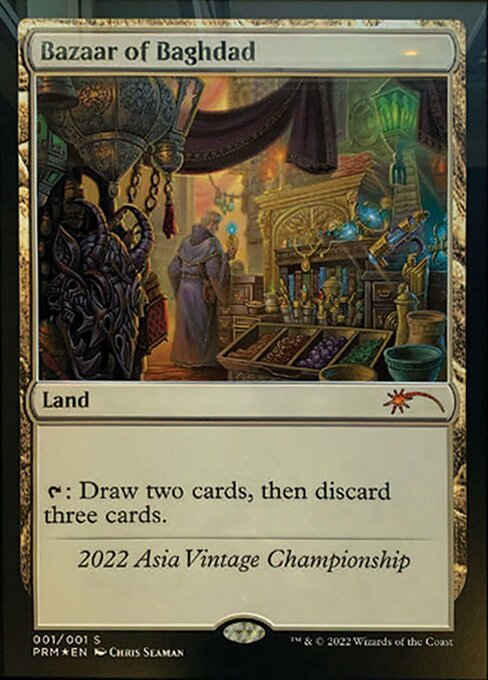
Buy Bazaar of Baghdad on eBay →
Universes Beyond cards, by design, share almost none of those traits. They're printed in massive modern quantities, they're driven by franchise fandom rather than gameplay scarcity, and their legality can be complicated. That's the core tension.
The case FOR holding Universes Beyond
There are real reasons UB has produced winners.
Crossover fans buy outside the MTG bubble
When a set pulls in a franchise's audience — Marvel, The Lord of the Rings, Star Trek — you get buyers who don't otherwise play Magic but want their character in cardboard. That demand pool is enormous and doesn't behave like normal Magic demand. The most famous example is the one-of-one card from the LOTR crossover, which became a cultural news story on its own. That kind of event drives sustained collector interest across the whole product line.
Some UB cards are genuinely playable staples
When a UB card is mechanically strong and Commander-legal, it gets demand from two directions — collectors and players. That's the sweet spot. Cards from sets like The Hobbit and the recent Star Trek release enter a format where the biggest player base (Commander) actually uses them, which supports a price floor better than pure collectible chase cards.
Special treatments concentrate value
The borderless, serialized, and Collector Booster-exclusive versions are where UB long-term value tends to actually live. Base-set copies get printed to oblivion; the scarce alternate frames are the pieces that hold.
The case AGAINST — and it's a strong one
Print runs are gigantic
Modern sets are printed in volumes the old sets never approached. A card from Arabian Nights survives on 30-year-old supply; a UB chase card competes against millions of freshly opened copies. Supply crushes long-term appreciation for all but the scarcest versions.
Reprint and licensing uncertainty
Here's the wrinkle unique to UB: these cards exist under licensing agreements. That creates two opposite risks. If a license ends, a card theoretically can't be reprinted the same way — which sounds bullish, but it also means Wizards front-loads supply while the license is active. And if a franchise stays popular, expect more product, more reprints of characters, and diluted scarcity.
Format legality is a moving target
UB cards are Commander-legal and generally play in eternal formats, but the mainstream Standard/rotation ecosystem doesn't support them the way it does normal sets. A card's price floor is strongest when tournament play needs it — and much of UB leans collectible rather than competitively essential.
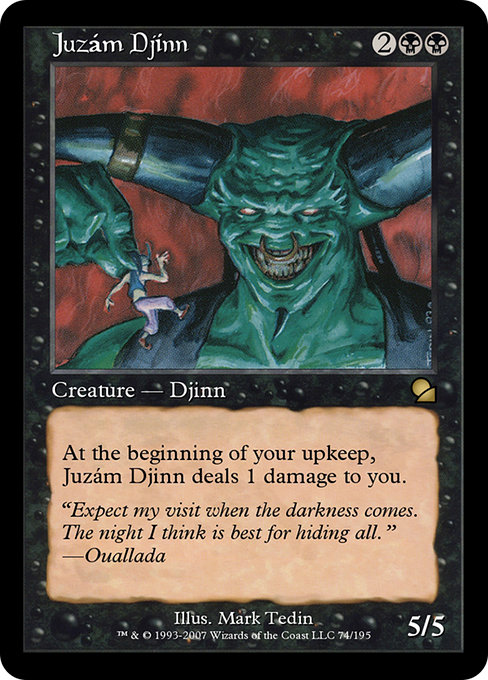
Compare the durability: Juzám Djinn has appreciated for decades on scarcity and prestige. A UB card has to fight a fresh print run, a franchise's fickle attention span, and uncertain reprint policy just to hold its release-week number.
How to actually approach UB as a hold
If you want to speculate on Universes Beyond intelligently, treat it like the collectible-with-upside asset it is, not like a Power Nine substitute.
Buy scarcity, not the base set
- Prioritize serialized and Collector-exclusive treatments over base rares. Bulk-printed base cards almost never appreciate.
- Favor cards that are ALSO Commander playable — dual demand supports the floor.
- Iconic characters age best. A franchise's flagship hero holds fan interest longer than a supporting-cast card.
Buy sealed if you're unsure
If you can't confidently pick the individual winners, sealed product is the lower-variance play. A Collector Booster Box gives you exposure to the scarce treatments where UB value concentrates, and sealed modern product tends to drift up once it's out of print. For the newest crossovers, the sealed product IS the buy while singles are still settling.
The Hobbit Collector Booster Box — check price on Amazon →
Timing matters more than with normal sets
UB singles often peak on release hype and dip once supply floods in, then slowly recover on the scarce versions. Buying at the hype peak is the classic trap. Waiting for the post-release supply glut usually gets you a better entry.
Where UB fits next to the classics
Think of your collection in two buckets:
| Bucket | Examples | Value profile |
|---|---|---|
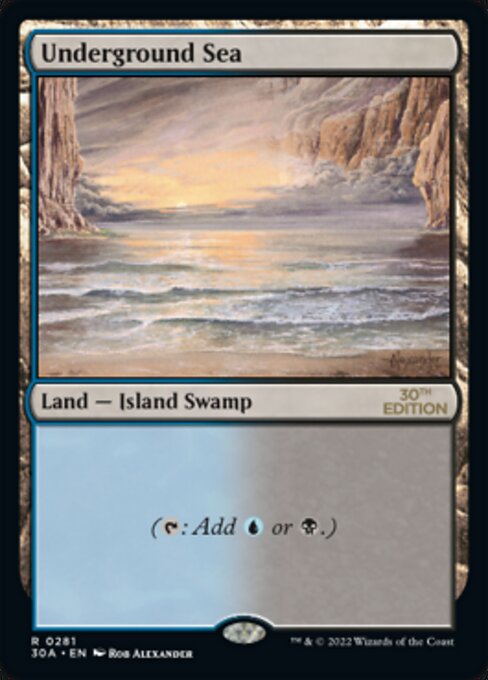
| Blue-chip eternal | Library of Alexandria, Mox Diamond, Underground Sea, Serra's Sanctum | Slow, steady, low-supply, reprint-protected classics |
| Speculative crossover | Serialized/scarce UB treatments | High ceiling, high variance, license-dependent |
The classics are the ballast. Something like Underground Sea holds because Legacy needs dual lands and old dual supply is fixed forever. Serra's Sanctum climbs because it's a scarce, powerful Commander enabler. Those are structural reasons UB cards rarely enjoy.
UB belongs in the growth slice of a collection — the part you're comfortable being wrong about — not the foundation.
The takeaway
Universes Beyond can absolutely make you money, but only the scarce treatments of iconic, playable cards behave like real long-term holds — everything else is hype that gets buried under a massive print run, so buy scarcity, buy dual-demand staples, and never confuse a crossover chase card with a Power Nine anchor.
Where to buy
Not financial advice. Card prices are volatile and can fall as easily as they rise — everything here is informational and reflects prices at the time of writing. Do your own research before buying to speculate.